
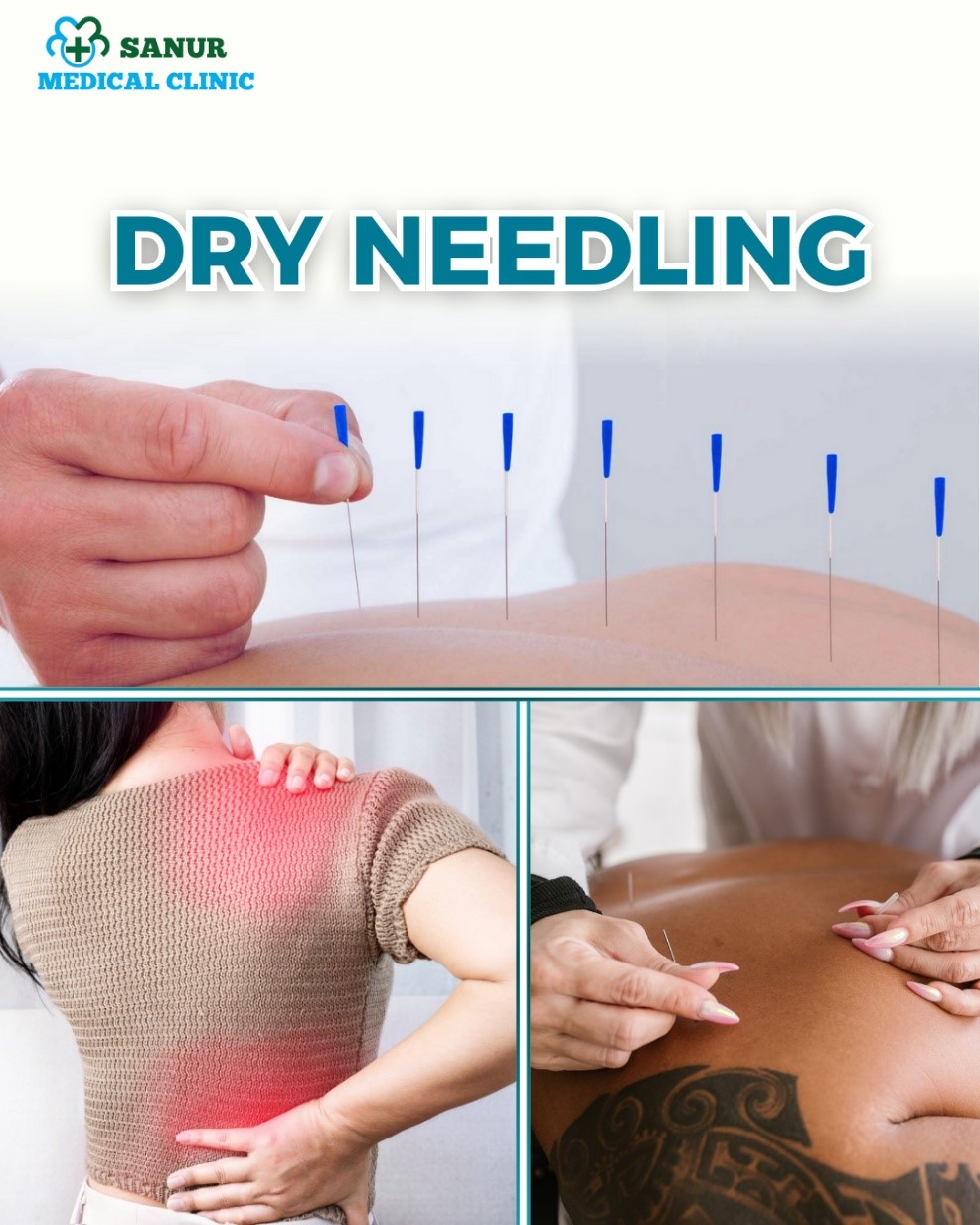
Chronic pain isn’t just discomfort—it can persist for weeks, months, or even years, affecting your ability to work, sleep, and enjoy daily life. Common causes include muscle tension, nerve irritation, old injuries, or conditions like arthritis and fibromyalgia.
What Is Dry Needling?
Dry needling is a therapeutic procedure performed by trained healthcare providers, including licensed physiotherapists and neurology specialists. It involves inserting a thin, sterile needle directly into tight muscle bands known as myofascial trigger points.
According to the American Physical Therapy Association (APTA), dry needling is increasingly used by physical therapists as part of a comprehensive treatment plan—though regulations vary by region.
These trigger points are sensitive areas in skeletal muscle that may cause localized pain or refer discomfort to other regions. By deactivating them, dry needling helps release muscle tension, reduce pain, and restore movement.
How Does Dry Needling Work?
- Targeted Needle Insertion: A fine needle is inserted into the trigger point to elicit a local twitch response.
- Muscle Release: The muscle briefly contracts, then relaxes, breaking the pain-spasm cycle.
- Reduced Inflammation: Biochemical studies show a decrease in pain-inducing substances like bradykinin and prostaglandins.
- Improved Blood Flow: Enhanced circulation delivers oxygen and nutrients, supporting natural healing.
Unlike acupuncture, which is based on traditional Chinese medicine and energy meridians, dry needling is grounded in anatomy, neurophysiology, and modern pain science.
Who Can Benefit From Dry Needling?
Dry needling may be effective for individuals with:
- Chronic neck, back, or shoulder pain
- Repetitive strain injuries (e.g., tennis elbow, rotator cuff issues)
- Frozen shoulder or restricted joint mobility
- Tension headaches and cervicogenic pain
- Myofascial pain syndrome
- Persistent muscle tightness unresponsive to massage or stretching
A 2018 clinical trial highlighted by the APTA found that adding dry needling to exercise therapy was more cost-effective for chronic shoulder pain than exercise alone.
Is Dry Needling Safe?
Yes—when performed by a qualified professional, dry needling is considered safe and well-tolerated. At Sanur Medical Clinic, we follow strict safety protocols:
- Use of sterile, single-use needles
- Adherence to anatomical guidelines to avoid nerves and blood vessels
- Patient screening for contraindications (e.g., bleeding disorders, infections, pregnancy)
Most patients experience minimal discomfort. Some report mild soreness for 24–48 hours, similar to post-exercise muscle fatigue.
Why Choose Sanur Medical Clinic?
At Sanur Medical Clinic, dry needling is administered by our experienced Neurology Specialist, ensuring treatment is tailored to your neurological and musculoskeletal needs. We combine dry needling with personalized rehabilitation strategies to help you regain mobility, reduce pain, and improve quality of life.
📅 Begin Your Healing Journey Today
Book your consultation or dry needling session:
📞 Call/WhatsApp: +62 823-3969-9820
🌐 Visit: www.sanurmedicalclinic.com
Conclusion
Dry needling offers a promising, non-pharmacological option for managing chronic pain. Supported by growing clinical evidence and adopted by healthcare professionals worldwide, it can be a valuable part of an integrated pain management plan.
If you’re ready to move beyond temporary relief, consult our neurology specialist at Sanur Medical Clinic to see if dry needling is right for you.
References
- American Physical Therapy Association (APTA). (2024). Dry Needling in Physical Therapy. Retrieved from https://www.apta.org
- Marx, R. et al. (2018). Cost-Effectiveness of Dry Needling for Chronic Shoulder Pain. Journal of Orthopaedic & Sports Physical Therapy.
- Dommerholt, J., & Fernández-de-las-Peñas, C. (2013). Trigger Point Dry Needling: An Evidence and Clinical-Based Approach. Elsevier.
- Gattie, E., Cleland, J.A., & Snodgrass, S. (2017). The effectiveness of trigger point dry needling for musculoskeletal conditions. Journal of Orthopaedic & Sports Physical Therapy, 47(3), 133–149.




 WhatsApp us